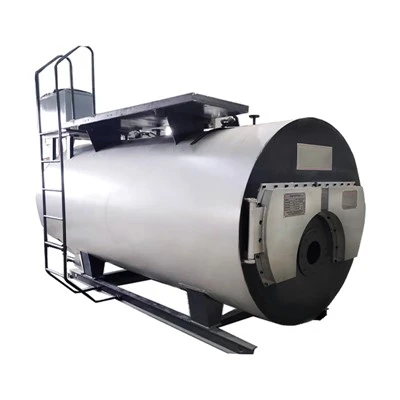
LNG Storage Tank Manufacturer for Reliable Cryogenic LNG Storage Solutions
We manufacture customized LNG Storage Tanks designed for safe, efficient, and reliable storage of Liquefied Natural Gas (LNG) for fueling stations, industrial gas applications, energy infrastructure, and distributed LNG systems.
Our vacuum-insulated cryogenic storage tanks are engineered for low heat leakage, stable pressure control, and long-term operational reliability, helping LNG operators and EPC contractors build efficient LNG storage systems.
-
![Skid-mounted LNG Storage Tank]() Skid-mounted LNG Storage TankThe Skid-Mounted LNG Storage Tank is a modular LNG supply system integrating vacuum-insulated storage, self-pressurization, vaporization, pressure regulation, metering, control and safety...

Technical Specifications
|
Parameter |
Standard Specification |
Customizable Range |
|
Capacity Range |
5 m³ – 250 m³ (Shop-built) |
Up to 100,000 m³ (Field-erected) |
|
Operating Temperature |
-162 °C (-260 °F) |
Down to -196 °C |
|
Working Pressure |
0.6 MPa – 1.6 MPa |
Up to 3.5 MPa (High-pressure variants) |
|
Inner Vessel Material |
Austenitic Stainless Steel (S30408 / S31603) |
9% Ni Steel / Aluminum Alloys |
|
Outer Vessel Material |
Carbon Steel (Q235B / Q345R) |
Stainless Steel for marine/corrosive areas |
|
Insulation Type |
Vacuum Perlite / Multi-layer Vacuum (MLI) |
Polyurethane Foam (Atmospheric tanks) |
|
Daily Boil-Off Rate (BOR) |
≤ 0.15% – 0.25% per day |
High-vacuum MLI optimization down to ≤ 0.08% |
|
Design Standards |
ASME Sec VIII Div 1, EN 13458, GB/T 18442 |
API 620, AS1210, GOST |
LNG Storage Tank Structural Design
Inner Cryogenic Pressure Vessel
Fabricated from high-grade 304/316L stainless steel or 9% nickel steel to retain fracture toughness and ductility at -162°C.
Outer Protective Shell
Heavy-duty carbon steel outer casing engineered to withstand vacuum pressure, external corrosion, and atmospheric environmental loads.
Perlite Vacuum Insulation
Expanded perlite under high vacuum environment for large-capacity economical thermal protection.
Internal Piping & Support System
Low-thermal-conductivity composite supports reduce thermal bridging between inner and outer shells while securing against transport shocks and seismic forces.
Applications
LNG Refueling Stations
Used as the primary LNG storage unit for vehicle fueling stations, providing reliable fuel supply for heavy-duty trucks, buses and commercial fleets.
LNG Satellite Stations
Suitable for areas without pipeline gas infrastructure, providing flexible LNG storage and supply solutions for remote industrial facilities, residential areas and distributed energy projects.
Industrial Gas Supply
Applied in factories, power plants and manufacturing facilities that require stable LNG storage for boilers, heating systems and industrial energy applications.
LNG Receiving Terminals & Distribution Centers
Used for LNG storage, transfer and regional distribution in small-scale LNG terminals and energy supply networks.
Engineering Review
Review project requirements, capacity, pressure rating, installation conditions, and technical specifications before production.
Material Inspection & Preparation
Verify cryogenic-grade materials and complete material traceability control before fabrication.
Vessel Fabrication & Welding
Perform shell forming, precision welding, machining, and assembly using controlled manufacturing processes.
Insulation & Vacuum Processing
Complete vacuum insulation installation, insulation filling, vacuum treatment, and thermal performance preparation.
Testing & Final Inspection
Perform pressure testing, leak testing, vacuum inspection, and final quality verification before delivery.

Quality Control & Testing
Material & Welding Inspection
Cryogenic-grade materials are verified through material traceability control. Welding processes are inspected to ensure structural integrity and compliance with project requirements.
01
Non-Destructive Testing (NDT)
Critical weld areas undergo inspection methods including radiographic testing (RT), ultrasonic testing (UT) and dye penetrant testing (PT) to verify weld quality.
02
Pressure & Leak Testing
Each LNG Storage Tank is tested through hydrostatic testing, pneumatic testing and leak detection procedures to confirm pressure resistance and sealing performance.
03
Vacuum & Cryogenic Performance Testing
Vacuum insulation performance is tested to minimize heat transfer and reduce LNG evaporation during storage operation.
04
Final Inspection & Documentation
Before delivery, we provide inspection records, test reports and quality documentation to support customer approval and project commissioning.
05
LNG Storage Tank Selection Guide
|
Selection Factor |
Key Considerations |
|
Storage Capacity |
Select tank volume according to LNG consumption and storage requirements. |
|
Tank Type |
Vertical or horizontal design based on site space and installation conditions. |
|
Operating Pressure |
Match pressure rating with fueling, industrial or distribution applications. |
|
Insulation System |
High-vacuum insulation reduces heat loss and LNG evaporation. |
|
Connection Design |
Customize inlet, outlet, vent and instrument connections for system integration. |
|
Safety Requirements |
Configure pressure relief, monitoring and protection systems according to project needs. |
Engineering & Customization Support
Bespoke Dimensions
Customized length, diameter, and nozzle orientations to fit tight footprints or existing station layouts.
3D Piping & Structural Modeling
Full BIM and CAD design integrating pumps, vaporizers, and valving skids.
Seismic & Wind Load Adaptations
Structural engineering tailored to high seismic zones (Zone 4) and extreme wind speeds (up to 250 km/h).
EPC Engineering & Documentation Support
For LNG projects, we provide technical support including:
General arrangement drawings
Equipment specifications
Technical data sheets
Material documentation
Inspection records
Testing reports
Manufacturing Capability
Production Area
69000㎡ specialized cryogenic pressure vessel production facility.
Heavy Machining Equipment
Automatic submerged arc welding (SAW) machines, CNC plasma cutting tables, 100mm plate rolling machines, and indoor dust-free vacuum filling rooms.
Certifications
It holds authoritative U.S. ASME and European CE certifications and possesses over 70 patents.

FAQ
With abundant experience, we are one of the most reliable LNG storage tank manufacturers and suppliers in China. We warmly welcome you to buy durable LNG storage tank made in China here from our factory. If you have any enquiry about cooperation, please feel free to email us.