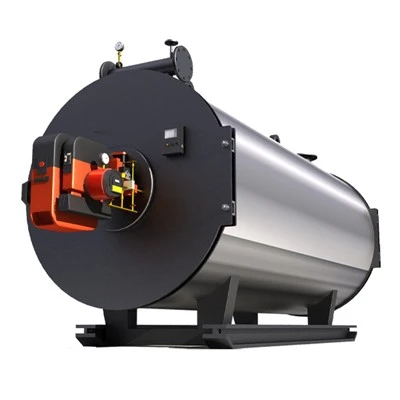

The Vertical Fixed Grate Biomass Fired Thermal Oil Boiler is a low-pressure industrial heating system that generates thermal oil temperatures up to 320°C using renewable biomass fuels. Designed for continuous process heating, it provides stable heat output compared with conventional fossil-fuel-fired boilers.
Main parameters and performance
|
Model |
Rated Power (kW) |
Rated Power (×10⁴ kcal/h) |
Thermal Efficiency(%) |
Max Working Temp (℃) |
Design Pressure (MPa) |
Circulation Oil Flow (m³/h) |
Approx Weight (kg) |
|
YGL-120 |
120 |
10 |
≥74 |
320 |
1.1 |
12.5 |
1560 |
|
YGL-240 |
240 |
20 |
≥74 |
320 |
1.1 |
20 |
1960 |
|
YGL-350 |
350 |
30 |
≥74 |
320 |
1.1 |
30 |
3520 |
|
YGL-500 |
500 |
40 |
≥75 |
320 |
1.1 |
40 |
3800 |
|
YGL-700 |
700 |
60 |
≥77 |
320 |
1.1 |
60 |
4900 |
|
YGL-1000 |
1000 |
80 |
≥77 |
320 |
1.1 |
80 |
6100 |
|
YGL-1200 |
1200 |
100 |
≥78 |
320 |
1.1 |
100 |
7500 |
|
YGL-1400 |
1400 |
120 |
≥78 |
320 |
1.1 |
100 |
8820 |
|
YGL-2000 |
2000 |
160 |
≥79 |
320 |
1.1 |
160 |
12690 |
Key Technical Features
Stable High-Temperature Heat Output
The radiant and convective multi-pass coil design maximizes heat transfer efficiency while maintaining uniform thermal oil circulation, delivering outlet temperatures up to 320°C without localized overheating.
Reliable Continuous Operation
Industrial-grade circulation pumps, automatic draft control, and PLC-based combustion management maintain stable oil temperature throughout extended operating cycles while reducing manual intervention.
Simplified Maintenance
The vertical furnace structure provides convenient access for ash removal, grate inspection, and routine maintenance, minimizing production downtime.
Core System Components
1. Combustion & Heat Transfer System
Vertical Fixed Grate Furnace: Engineered combustion chamber optimizing biomass solid fuel burning.
Coil Assembly: Radiant inner coil and convective outer coil designed for rapid oil circulation and high thermal absorption.
2. Thermal Fluid Circulation System
Circulation Pump: High-temperature thermal oil pump delivering continuous liquid-phase heat transfer.
Expansion & Storage Tanks: Nitrogen-sealed expansion tank to handle fluid thermal expansion alongside an integrated oil storage vessel.
3. Air Supply & Flue Gas System
Draft Fans: Forced Draft (FD) fan for primary/secondary air distribution and Induced Draft (ID) fan for balanced furnace draft.
Flue Gas Clean-Up: Cyclone dust collector or baghouse filter configured according to emission compliance requirements.
4. Control & Safety Systems
PLC Control Cabinet: Industrial control system (Siemens / Delta) featuring intuitive HMI touch interface.
Safety Interlocks: Dual-pump automated switchover interlock, pressure relief valves, and over-temperature safety shutdown devices.
Industrial Applications
Chemical & Synthetics: Polymerization reactors, resin processing, storage tank heating
Textiles & Leather: Dyeing vats, stenter drying frames, fabric finishing
Wood & Building Materials: Hot presses for plywood, MDF board production, veneer drying
Food & Feed Processing: Industrial deep fryers, vegetable oil deodorization, grain drying
Rubber & Plastics: Autoclaves, extrusion lines, vulcanization presses
Customization Options
|
Parameter / Engineering Feature |
Standard Configuration & Optional Variants |
|
Thermal Capacity |
120 kW to 2,000 kW (100,000 kcal/h to 1,700,000 kcal/h) |
|
Fuel Feeding System |
Manual hearth firing / Automated mechanical stoker or screw feeder |
|
Ash Removal |
Manual dry ash cleanout / Automatic continuous screw conveyor |
|
Emission Control |
Cyclone separator, Multi-cyclone, Baghouse filter, or Wet scrubber |
|
Control System |
Siemens / Delta PLC with Modbus / Ethernet communication interfaces |
|
Structural Layout |
Skid-mounted containerized/packaged unit or stationary field assembly |
|
Electrical Specification |
220V–480V / 50Hz–60Hz / 3-Phase |
Manufacturing Quality Control
Every boiler is manufactured under a documented quality control process to ensure long-term operational reliability.
EN 10204 3.1 certified steel materials
Certified welding procedures with RT/UT inspection where required
Hydrostatic pressure testing before delivery
PLC functional testing and safety interlock verification
Complete Factory Acceptance Test (FAT) before shipment
Packaging & Logistics
Each boiler is prepared for international transportation with anti-corrosion surface treatment, moisture-resistant protection, reinforced steel supports, and secure lifting points. Technical documents including GA drawings, P&ID, electrical diagrams, inspection reports, and operation manuals are supplied with every project.
FAQ
Q: What biomass fuels can this boiler burn?
A: The boiler is suitable for wood chips, wood pellets, sawdust, rice husks, coconut shells, palm shells, biomass briquettes, and similar solid biomass fuels. Fuel size and moisture content should be evaluated during project design to achieve the best combustion efficiency.
Q: How do I choose the correct boiler capacity?
A: The required capacity depends on your process temperature, production output, heat consumption, and operating hours. Providing your required outlet oil temperature, heating load, and fuel type allows engineers to recommend the appropriate model.
Q: What is the typical thermal efficiency?
A: Thermal efficiency depends on fuel quality, moisture content, combustion configuration, and insulation conditions. Properly designed systems generally achieve high thermal efficiency when operated with suitable biomass fuel and regular maintenance.
Q: Can this boiler replace an existing coal-fired or oil-fired boiler?
A: Yes. Many manufacturers upgrade to biomass-fired thermal oil boilers to reduce fuel costs and comply with stricter environmental regulations. Existing heating processes can often be retained while replacing only the heat source.
Q: How often should thermal oil be replaced?
A: Thermal oil service life depends on operating temperature, oil quality, and maintenance practices. Under normal operating conditions with proper circulation and temperature control, thermal oil can typically be used for several years before replacement or partial replenishment is required.
Q: What installation support is available?
A: Manufacturers can provide layout drawings, foundation recommendations, piping diagrams, electrical documentation, commissioning guidance, and operator training. Remote technical support or on-site installation services are also available depending on project requirements.
Q: What information is required for a quotation?
A: To prepare an accurate quotation, buyers typically need to provide:
Required heating capacity
Required oil temperature
Biomass fuel type
Fuel moisture content
Local power supply
Installation location
Emission requirements
Hot Tags: vertical fixed grate biomass fired thermal oil boiler, China vertical fixed grate biomass fired thermal oil boiler manufacturers, suppliers, factory, hot oil heating equipment, hot oil safety system, industrial hot oil boiler, industrial thermal oil heater, thermal oil heater dimensions, thermal oil safety system