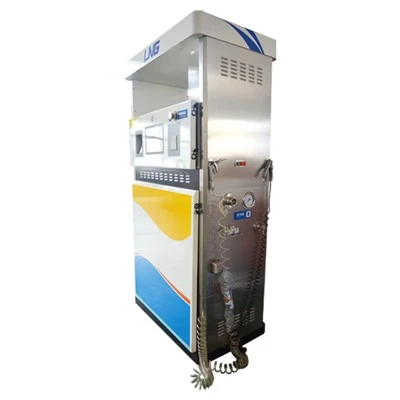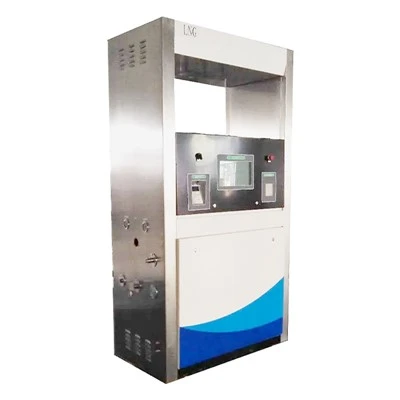

The L-CNG Refueling Machine integrates LNG direct filling and LNG-to-CNG compression systems for stations serving both LNG and CNG vehicles. It uses a low-temperature high-pressure LNG pump, gasifier, high-pressure storage cylinders, sequence control panel, and dual fuel dispensers to provide metered vehicle refueling.
Technical Specifications
|
Parameter |
Specification |
|
Equipment Type |
L-CNG Dual-System Refueling Machine |
|
LNG Pump Inlet Pressure |
Typically 0.6–1.2 MPa |
|
High-Pressure Pump Outlet Pressure |
≥25 MPa |
|
CNG Storage Cylinder Working Pressure |
25 MPa |
|
CNG Dispenser Output Pressure |
20 MPa |
|
LNG Refueling Capacity |
30–120 kg/min |
|
CNG Filling Capacity |
8–25 Nm³/min |
|
LNG Filling Gun |
Low-temperature LNG filling gun |
|
CNG Filling Gun |
High-pressure CNG filling gun |
|
Core Pump |
LNG low-temperature high-pressure pump |
|
Gasification System |
High-pressure air-temperature gasifier |
|
Gas Storage |
High-pressure CNG storage cylinder group |
|
Control System |
CNG sequence control panel |
|
Refueling System |
LNG and CNG metered dispenser |
Final configuration, flow capacity, pressure rating, electrical requirements, and station layout can be confirmed according to project conditions and applicable local regulations.
Key Features
Dual LNG & CNG Refueling
Supports both LNG liquid filling and CNG gas filling in one integrated station system, reducing the need for separate refueling equipment.
Efficient LNG-to-CNG Conversion
LNG is pressurized and vaporized through the high-pressure gasifier before entering the high-pressure storage system, enabling CNG production from stored LNG.
High-Pressure Gas Storage
The CNG storage cylinder group is designed for a working pressure of 25 MPa and provides buffer storage for stable vehicle refueling.
Sequence-Controlled Gas Distribution
The CNG sequence control panel manages gas flow between the storage cylinder group and dispenser to improve filling efficiency and pressure utilization.
Working Principle
For CNG production, LNG is extracted from the storage tank by the low-temperature high-pressure pump. The pressurized LNG then passes through the high-pressure air-temperature gasifier, where it is converted from liquid LNG into high-pressure natural gas. The resulting CNG enters the high-pressure gas storage cylinder group through the sequence control panel.
During vehicle refueling, the sequence control system manages gas distribution from the storage cylinders to the CNG dispenser. The dispenser meters and delivers CNG to the vehicle at the required filling pressure.
For LNG vehicles, LNG can be supplied directly from the low-temperature side through the dedicated LNG filling line and filling gun.
Process Flow
LNG Storage Tank → High-Pressure LNG Pump → Gasifier → Sequence Control Panel → High-Pressure CNG Storage → CNG Dispenser → Vehicle →LNG Storage Tank → LNG Filling Line → LNG Dispenser → Vehicle
OEM & Project-Based Supply
|
Item |
Customization / Project Configuration |
|
LNG Storage Capacity |
Selected according to station demand |
|
LNG Pump Capacity |
Matched to required LNG/CNG throughput |
|
CNG Storage Capacity |
Configured according to filling demand |
|
Gasifier Capacity |
Matched to required CNG production rate |
|
Dispenser Configuration |
LNG, CNG, or dual-system configuration |
|
Filling Guns |
Connection specifications according to vehicle requirements |
|
Control System |
Configured according to station process |
|
Electrical System |
Adapted to local power supply requirements |
|
Station Layout |
Customized according to site conditions |
|
Language |
Control interface and documentation can be customized |
|
Branding |
OEM nameplate, logo, and identification available |
Why Choose Xinxiang Chengde Energy Technology Equipment Co., Ltd.
Established Manufacturer: Operating since 2002 with dedicated equipment manufacturing facilities.
Multi-Base Production: One equipment industrial park and three manufacturing bases with approximately 69,000 m² of standardized workshops.
Engineering Qualifications: A2 pressure vessel manufacturing, pressure vessel design, pressure pipeline design, and pressure pipeline installation qualifications.
Pressure & Cryogenic Expertise: Experience in pressure equipment and low-temperature energy equipment manufacturing.
International Compliance: Certification portfolio includes ASME and CE, with product type certification for low-temperature equipment.
Project-Based Supply: Equipment configuration can be adapted to station capacity, storage requirements, local standards, and site conditions.
OEM Support: Branding, documentation, control interface, packaging, and selected technical configurations can be customized.
Packaging & Delivery
L-CNG equipment is prepared for international transportation using standard export packaging or customized packaging according to equipment dimensions, shipping conditions, and buyer requirements.
Available delivery methods include:
Sea Freight: Suitable for complete equipment and station projects
Air Express: Suitable for documents, selected components, or urgent small items
Shipping arrangements can be coordinated according to the destination, equipment configuration, delivery schedule, and applicable import requirements.
Frequently Asked Questions
Q: What factors affect the actual CNG filling performance?
A: Actual filling performance depends on factors such as LNG supply conditions, pump and gasifier capacity, CNG storage capacity, initial vehicle pressure, ambient conditions, and station operating strategy.
Q: What information is required for an L-CNG quotation?
A: Buyers should provide the required LNG storage capacity, expected daily or hourly fueling demand, LNG/CNG fueling ratio, vehicle types, destination country, local power supply, applicable standards, and available installation space. This information allows the equipment configuration and quotation to be matched to the project.
Q: What warranty is provided?
A: The standard warranty period is one year, excluding quick-wear parts. Specific warranty terms are confirmed in the commercial contract.
Q: Can installation and commissioning support be provided?
A: Yes. Installation guidance, commissioning instructions, technical documentation, and remote technical support can be arranged according to the project requirements. On-site service can be discussed separately for projects requiring it.
Q: What routine maintenance does the L-CNG system require?
A: Routine maintenance typically includes inspection of pumps, valves, filling guns, gasifiers, dispensers, control components, and pressure connections. Maintenance intervals should follow the equipment manual and actual operating conditions.
Q: Are spare parts available for long-term operation?
A: Yes. Common replacement parts and maintenance components can be supplied according to the equipment model and configuration. A recommended spare-parts list can also be prepared for project operators.
Hot Tags: l-cng refueling machine, China l-cng refueling machine manufacturers, suppliers, factory, lng dispenser cryogenic valve, lng dispenser monitoring, lng dispenser nozzle, lng fueling dispenser, lng refueling machine flow rate, lng refueling machine nozzle system