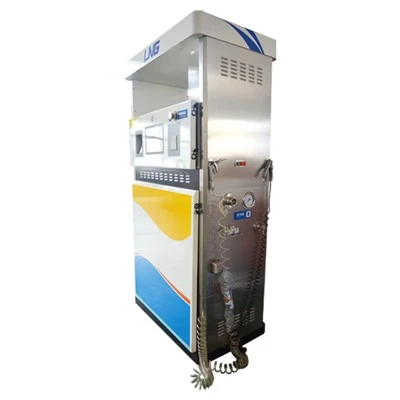

The LNG Mobile Refueling Machine is a trailer-mounted LNG storage and dispensing system designed for flexible fuel supply where a fixed LNG station is unavailable or temporary fueling capacity is required. It integrates an LNG storage tank, metering and dispensing system, pressure-building gasifier, control system, and safety devices on a semi-trailer or truck-direct trailer chassis.
Technical Specifications
|
Parameter |
Typical Specification |
|
Equipment Type |
Mobile LNG Refueling Machine / LNG Mobile Fueling Unit |
|
Chassis Form |
Semi-trailer type; truck-direct trailer type |
|
LNG Tank Capacity |
20–52 m³ |
|
Common Tank Capacity |
40–50 m³ |
|
Curb Weight |
Approx. 25–40 tons |
|
Overall Length |
Approx. 12–16 m |
|
Overall Width |
Approx. 2.5 m |
|
Overall Height |
Approx. 3.8 m |
|
Storage Tank Working Pressure |
Typically 0.6–1.2 MPa |
|
Filling Capacity |
Approx. 50–150 kg/min |
|
Filling Pressure |
Typically 1.2–1.6 MPa |
|
Measurement Accuracy |
Typically ±1.0% or better, subject to the selected metering system |
|
Control System |
Touchscreen control system |
|
Control Functions |
Quantitative filling, amount setting, operating monitoring, data uploading |
|
Power Supply |
External 380V mains or vehicle-mounted diesel generator |
|
Pressure-Building System |
Integrated self-pressurized gasifier |
|
Safety System |
ESD, gas leakage alarm, firefighting equipment, flame arrester, etc. |
Key Features
A semi-trailer or truck-direct trailer configuration allows the equipment to be transported between fueling locations and deployed for temporary, remote, or supplementary LNG supply.
An integrated small self-pressurized gasifier helps maintain the required tank pressure during dispensing and supports stable LNG transfer without requiring a separate external pressure-building system.
The control interface supports functions such as preset quantitative filling, amount setting, operating-status monitoring, and data uploading, helping operators manage routine fueling operations.
Typical Applications
LNG vehicle fleet fueling where a permanent station is not available
Temporary LNG fueling stations during infrastructure construction or expansion
Remote industrial and logistics sites with limited fixed fueling infrastructure
Peak-demand fueling support for existing LNG stations
Fleet depots and transport yards requiring dedicated LNG supply
Emergency or backup LNG fueling during maintenance or temporary station shutdowns
Customization Options
|
Customization Item |
Available Configuration |
|
Tank Capacity |
Approx. 20–52 m³ |
|
Chassis |
Semi-trailer or truck-direct trailer type |
|
Refueling Capacity |
Approx. 50–150 kg/min |
|
Power Supply |
380V external power or diesel generator |
|
Metering System |
Selected according to accuracy and local requirements |
|
Dispensing Connections |
Configured for target LNG vehicles |
|
Control System |
Touchscreen, data recording/uploading options |
|
Safety Configuration |
ESD, gas detection, flame arrester, firefighting equipment, etc. |
|
Branding |
Logo, nameplate, control-panel identification |
|
Documentation |
Operation manual, technical drawings, inspection and quality documents as applicable |
Safety & Operational Considerations
LNG is a cryogenic and flammable fuel, so the mobile refueling unit must be operated according to the applicable LNG handling, pressure equipment, electrical, transportation, and fire-safety requirements.
Key considerations include:
- Installation and operation should follow the approved equipment documentation and applicable local regulations.
- The refueling area should provide adequate ventilation and appropriate separation from ignition sources.
- Emergency shutdown functions should be accessible to trained operators.
- LNG hoses, valves, connectors, and seals should be inspected according to the operating and maintenance schedule.
- Gas detection and other safety devices should be tested periodically.
- Operators should receive appropriate training in LNG transfer, cryogenic hazards, emergency procedures, and equipment operation.
Manufacturing & Quality Control
Xinxiang Chengde Energy Technology Equipment Co., Ltd. was established in 2002 and operates one equipment industrial park and three manufacturing bases, with approximately 69,000 m² of standardized workshops and more than 500 employees.
The company holds A2 pressure vessel manufacturing and design qualifications, as well as pressure pipeline design and installation qualifications. Its stated quality and certification portfolio includes international quality certifications, pressure equipment-related qualifications, CE certification, ASME-related certification, and other product and management certifications.
Manufacturing and quality-control activities can cover pressure-vessel fabrication, welding, component inspection, system assembly, pressure-related testing, electrical/control integration, and final equipment inspection according to the applicable project requirements.
FAQ
Q: Can the LNG mobile refueling unit operate without external grid power?
A: Yes. The system can be configured with a vehicle-mounted diesel generator when external 380V power is unavailable or when greater deployment flexibility is required.
Q: What information is required for an LNG mobile refueling machine quotation?
A: For an accurate quotation, buyers should provide the required tank capacity, target LNG dispensing rate, destination country, chassis preference, power supply conditions, vehicle types to be fueled, applicable certification requirements, and any required control or data-management functions.
Q: What warranty is provided?
A: The standard equipment warranty is one year, excluding quick-wear parts. The final warranty scope, exclusions, and after-sales terms should be confirmed in the sales contract.
Q: Is the machine supplied ready for immediate operation?
A: The unit is factory-integrated, but site-specific commissioning and regulatory checks are still required before commercial operation. Electrical connections, grounding, LNG transfer arrangements, safety systems, and local compliance requirements should be verified at the installation site.
Q: What documentation is supplied with the machine?
A: Standard documentation may include technical specifications, drawings, operation manuals, inspection records, certificates, and packing lists. The final document package is confirmed according to the order and destination-market requirements.
Q: How is the machine packaged and delivered?
A: The equipment is supplied with standard export packaging or customized packaging. Trailer-mounted units are typically delivered by sea freight, with packaging and shipping arrangements confirmed according to the equipment configuration and destination.
Hot Tags: LNG mobile refueling machine, China LNG mobile refueling machine manufacturers, suppliers, factory, lng dispenser capacity, lng dispenser cryogenic valve, lng dispenser insulation, lng dispenser nozzle, lng refueling machine flow rate, lng refueling machine valve system